
How to Search Franklin County Traffic Court Records
Franklin County traffic cases are searched through the North Carolina court system. The NC eCourts Portal provides Smart Search, hearing search, payments, and judgment tools for eCourts counties. Franklin County is an eCourts county, so the Portal is the first online source for traffic case information and eligible payments. Select Franklin County when narrowing the search so a statewide name search does not pull unrelated cases from other counties.
Traffic records can be searched by record number or party name in Smart Search. Hearing Search can be used when the goal is to find a court date instead of the full traffic case file. If an online payment page is down or a case is not eligible for online payment, the North Carolina Judicial Branch traffic guidance says the person is still responsible for timely payment to the courthouse or appearing in court as directed.
- Open NC eCourts Portal and choose Smart Search for case information or Search Hearings for court dates.
- Enter the citation or record number if known, or search by party name using the Portal name format.
- Use Advanced Filtering Options and select Franklin County under Location.
- Review case status, hearing details, payment eligibility, and disposition fields when available.
- For official copies, missing records, background-check use, or older files, contact the Clerk of Superior Court.
The NC Judicial Branch traffic violations page is the official statewide help source for payment and appearance guidance.
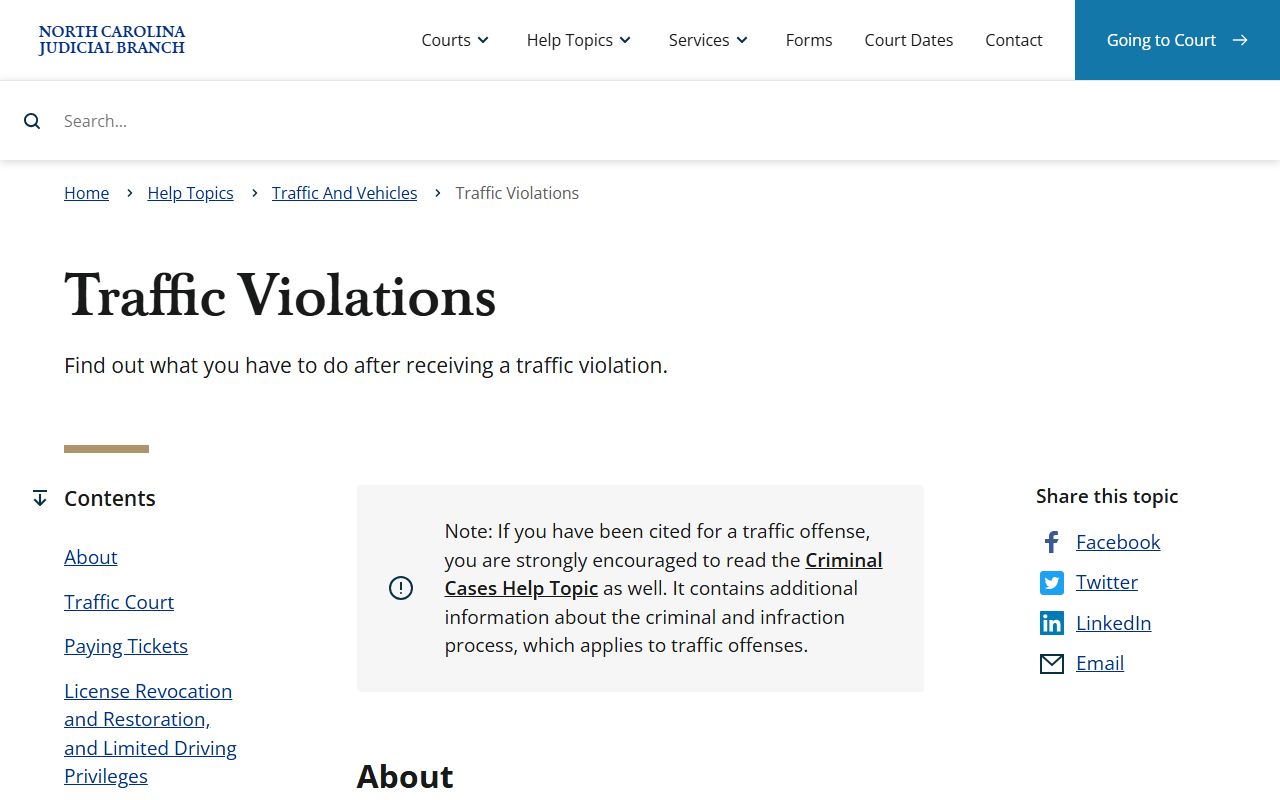
That source confirms the payment and appearance rules that apply when Franklin County traffic citations move through state court.
Which Courts Handle Traffic Cases in Franklin County
Franklin County traffic cases are North Carolina District Court matters handled through the Clerk of Superior Court and NC eCourts. There is no separate Franklin County municipal traffic court. Local officers, town police, deputies, and State Highway Patrol may issue citations, but payment and court appearance flow through the clerk and court system for the county where the citation was issued. The Franklin County Courthouse is the local state court location for these records.
The same state court structure matters for missed court and failure-to-comply issues. District Court handles infractions, misdemeanors, traffic matters, small claims, juvenile matters, domestic cases, and magistrate matters. Superior Court handles felonies and higher-value civil matters, so an impaired-driving or felony traffic-related case may connect to criminal court records after charging and prosecution decisions.
| Court or Office | Traffic Cases Handled | Address / Contact |
|---|---|---|
| Franklin County District Court | Infractions, traffic citations, misdemeanors, and many first traffic appearances. | 102 S Main St., Louisburg, NC 27549 |
| Clerk of Superior Court | Traffic case records, eligible payments, court copies, and procedural questions. | (919) 497-4200 |
| Magistrates | Initial process and related District Court functions when applicable. | (919) 497-4280 |
| State Highway Patrol or local police | Citation issuing agency or crash report source, not the court payment office. | Agency depends on who issued the citation or report. |
Franklin County Traffic Case Types
Traffic court records in Franklin County can include infractions, waivable citations, mandatory-appearance charges, misdemeanor traffic offenses, and impaired-driving matters. The court record shows the citation or case process. It does not replace a crash report from the agency that investigated a wreck or a driver record from the state motor-vehicle agency. A traffic charge may also become part of a broader criminal case if the offense is not a simple infraction.
- Moving violations - Speeding and other driving conduct may appear as infractions or criminal traffic matters.
- Equipment or compliance citations - Registration, inspection, insurance, or equipment issues may create court records.
- Failure to appear or pay - Missing a required traffic date or payment can add court and license consequences.
- Commercial driver matters - CDL cases may have separate reporting and license effects beyond the court case.
- DWI and related offenses - Impaired-driving cases are criminal matters and may require court appearance.
The North Carolina State Highway Patrol traffic tickets page states that fines and costs are not paid to the officer but to the Clerk of Superior Court.
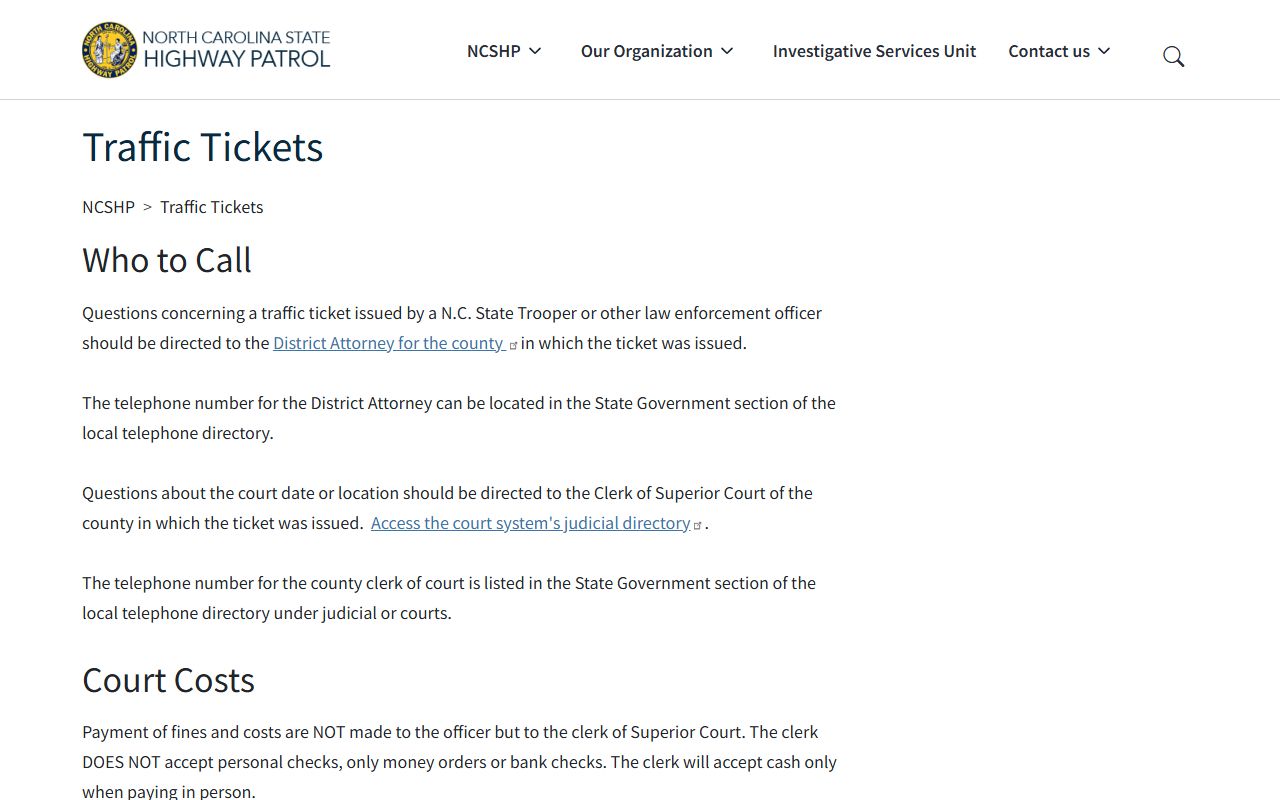
That distinction is important when the ticket was issued by a trooper but the case is still paid or contested through the court system.
What Franklin County Traffic Court Records Show
Traffic court records show the court case. They may include citation number, defendant name, charge description, court location, hearing date, disposition, fines, costs, and payment status if those fields are in the case data. The same person may also have a driver record that lists convictions reported to DMV, license status, points, and suspensions. The court file is where the case was handled. The driver record is where license history is tracked.
| Field | What It Shows |
|---|---|
| Citation or case number | The traffic case identifier used in Portal and clerk records. |
| Defendant / party name | The person charged or cited in the Franklin County traffic case. |
| Charge or offense | The traffic infraction, misdemeanor, or related offense description. |
| Court date | The hearing or appearance date if one is scheduled or searchable. |
| Disposition | The outcome, such as paid, dismissed, guilty, responsible, or another case result when available. |
| Fines and costs | Amounts due or payment status when the case is eligible and visible. |
| Failure to appear / comply | Missed court or payment status if recorded in the court case data. |
Franklin County Citation Search Fields
Portal search fields for traffic cases are the same core eCourts fields used for other public case searches. A citation or record number is usually the cleanest search key. Name searching can work when the number is unknown, but it can return multiple people or cases. Advanced filters help narrow results by Franklin County, case status, case type, and file-date range. Hearing Search is the better tool for court date checks.
| Search Field | Type | Required | Notes / Format |
|---|---|---|---|
| Record number or name | Text | Yes for basic search | Use citation/case number or Last, First Middle Suffix format. |
| Filter by Location | Dropdown | Optional but important | Select Franklin County to avoid statewide matches. |
| Case Type | Dropdown | Optional | Use to narrow traffic, criminal, infraction, or other case categories where available. |
| Case Status | Dropdown | Optional | Can narrow open, disposed, closed, or similar statuses depending on Portal coding. |
| File Date Start / End | Date | Optional | Useful when the citation date or filing window is known. |
| Hearing search type | Dropdown | Required in Hearing Search | Options include case number, party name, attorney, judicial officer, and courtroom. |
Paying or Contesting a Franklin County Traffic Ticket
NC Judicial Branch traffic guidance says online payment is an alternative to payment in person or by mail when a citation is eligible. If the website is unavailable, the person remains responsible for timely payment to the courthouse or appearing in court as noted on the citation. Questions about a citation or other payment options go to the Clerk of Superior Court in the county where the citation was issued. In Franklin County, the clerk contact number in the court directory is (919) 497-4200.
State Highway Patrol guidance says court costs are paid to the Clerk of Superior Court, not to the officer. The same guidance says the clerk does not accept personal checks, accepts money orders or bank checks, and accepts cash only when paying in person. Portal Make Payments accepts Visa, MasterCard, and Discover; the research says Apple Pay, Google Pay, Cash App, Venmo, and similar digital apps are not accepted.
Important: Paying may resolve some waivable traffic cases, but mandatory-appearance charges still require court action.
Public Access Laws for Traffic Court Records
Franklin County traffic court records are court records kept by the Clerk of Superior Court unless a statute or court order restricts access. N.C.G.S. 7A-109 requires clerks to keep court records, dockets, files, and indexes prescribed by AOC rules and makes them open to public inspection during regular office hours except where law says otherwise. Public-record law also applies to many government records, but court case access follows court custody and confidentiality rules.
Key Statutes:
N.C.G.S. 132-1 defines public records broadly unless another law limits access.
N.C.G.S. 132-6 requires inspection and copies at reasonable times after lawful fees are paid.
N.C.G.S. 7A-109 covers clerk recordkeeping and public inspection of court records.
Court Traffic Records vs State Driver Records
A Franklin County traffic court record and an NC driver record answer different questions. The court traffic record shows what happened in the case: citation, charge, court date, disposition, fines, costs, and failure-to-appear or payment status when visible. The state driver record shows license status, convictions reported to DMV, points, suspensions, and driving history. A case can be disposed in court before the driver's record fully reflects the result.
| Record Type | Source | What It Shows | How to Access |
|---|---|---|---|
| Court traffic record | Clerk of Superior Court / NC eCourts | Citation or case number, defendant, charge, court date, disposition, fines, costs, and failure-to-appear status when in case data. | NC eCourts Portal or Franklin County Clerk of Superior Court. |
| State driver record | DMV / state motor vehicle agency | License status, convictions reported to DMV, points, suspensions, and driver history. | State driver-record process, not the county court file. |
The NC DAC offender search page is a criminal custody and supervision source, not a driver-record or county traffic ticket portal.
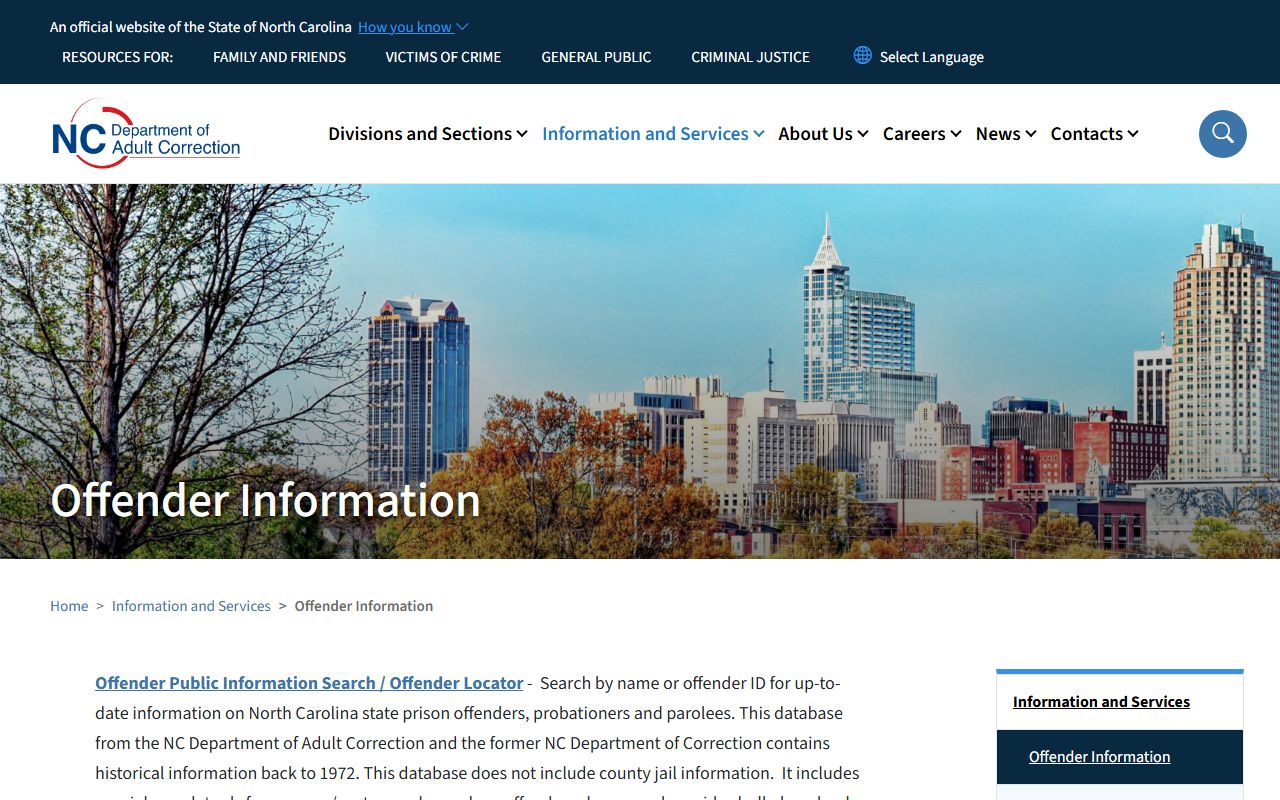
That contrast helps keep court traffic records, driver records, and state offender records in their proper lanes.
CDL and Commercial Driver Records
Commercial drivers should treat Franklin County traffic citations as both court and license matters. The court record shows the traffic case, but CDL consequences may be reported through state and federal driver-record systems. A payment that resolves a waivable citation in court may still have driver-record effects. Because the research did not provide a Franklin County CDL diversion program or local CDL fee schedule, the safe route is to check the citation, the court status, and the driver's licensing requirements before paying or missing a court date.
DUI / DWI Cases
DWI in North Carolina is not just a simple traffic ticket. It can create a criminal court record, license consequences, bond or release terms, and mandatory court action. In Franklin County, these cases still route through the state court system and the Clerk of Superior Court, not a town traffic court.
For the full case file and outcome, use Franklin County criminal court records.
Defensive Driving and Reductions
The research did not identify a Franklin County-specific defensive driving, deferred adjudication, or local amnesty page. North Carolina traffic outcomes depend on the charge, driving history, prosecutor or court action, and whether appearance is required. A person seeking a reduction, dismissal, compliance proof, or driver-record protection should check the citation and speak with counsel or the clerk about procedure. Do not assume an online payment path preserves license points or insurance consequences.
Sealing or Expunging Traffic Records
Traffic-related criminal records may be restricted only if a statute, court order, or expunction process applies. N.C.G.S. 15A-145.5 covers expunction rules for certain nonviolent misdemeanors and felonies. Eligibility depends on the charge, disposition, prior record, waiting period, and exclusions. Juvenile traffic-related matters, mental health records, sealed exhibits, and personal identifiers may have separate limits.
Expunction starts with the proper AOC petition in the county of the charge when the law allows it. If granted, the clerk and listed agencies process the order, and ordinary public access should no longer show the expunged case information. If denied, the record remains public unless a later statute or court order changes access.
Fees for Traffic Record Copies
The research did not provide a Franklin County traffic-copy fee table for the Clerk of Superior Court. It did provide payment-channel rules and general public-record fee principles. Use the clerk for certified court copies and current payment instructions. For county public records outside court files, Franklin County's public records fee material says fees may equal the actual cost for copying, compiling, or producing records requiring extensive staff or IT help.
| Item | Amount |
|---|---|
| Eligible online traffic payment | Portal payment amount shown in the case/payment system. |
| Card types in Portal | Visa, MasterCard, and Discover accepted. |
| Digital payment apps | Apple Pay, Google Pay, Cash App, Venmo, and similar apps not accepted in Portal research. |
| In-person cash payment | Cash accepted only when paying in person according to State Highway Patrol guidance. |
| Mail or non-cash payment | Money orders or bank checks; personal checks not accepted by the clerk per State Highway Patrol guidance. |
| Certified court copies | Call the Franklin County Clerk of Superior Court for current copy and certification fees. |
The NC DAC public records online page is assigned to this page as a state-record contrast source, not as a Franklin County traffic-copy fee source.
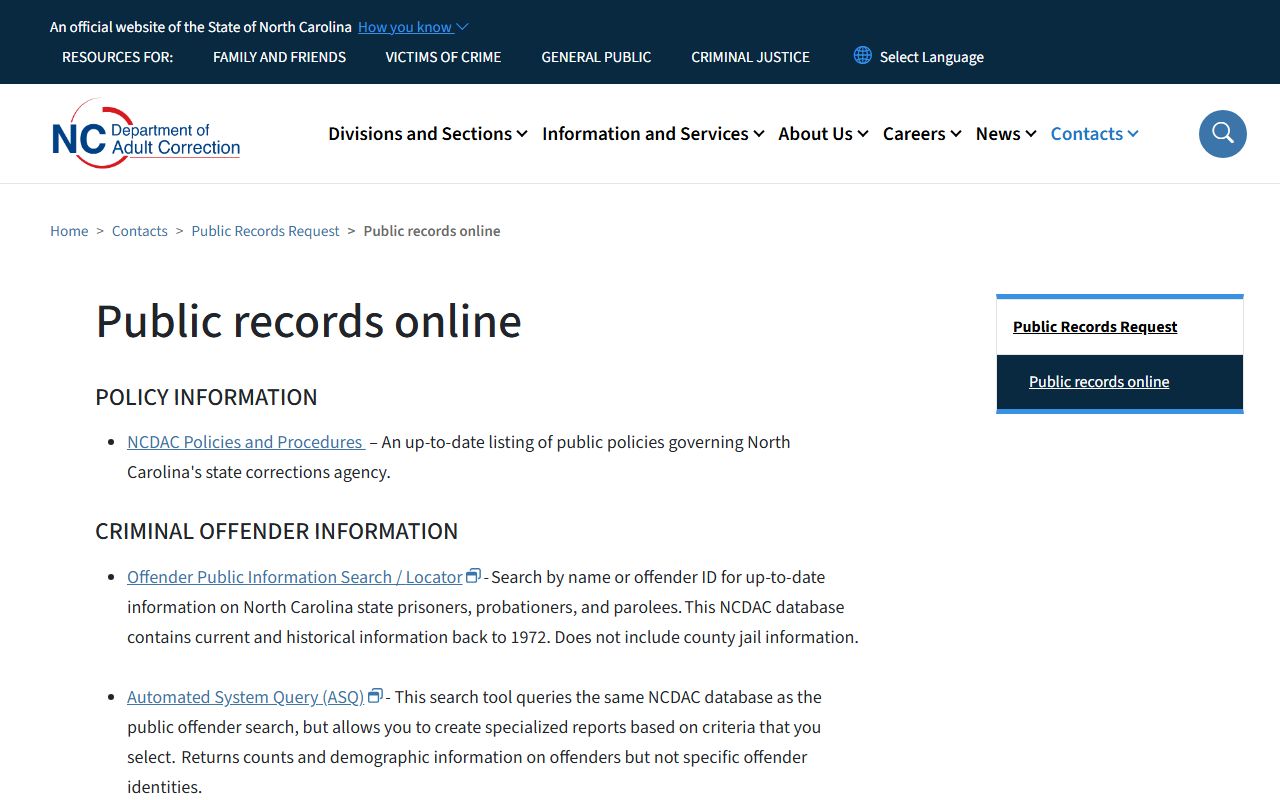
That state page reinforces that traffic court files, state custody records, and other agency records are requested from different custodians.