
Franklin County Probate Court Role
In Franklin County, probate begins with the Clerk of Superior Court. The North Carolina estates help topic says the elected clerk in each county acts as probate judge, and elected clerks or assistant clerks hold most estate hearings and preside over most estate cases. Franklin County's probate access point is the Clerk of Superior Court at the Franklin County Courthouse in Louisburg.
There is no separately named Franklin County probate court. Estates, wills admitted to probate, estate applications, letters, inventories, accountings, creditor notices, orders, receipts, renunciations, and related special proceedings are maintained through the clerk. If the validity of a will is challenged through a caveat, the caveat is heard by a Superior Court judge. That means contested will litigation moves beyond the ordinary clerk hearing path.
The official estates source is the assigned source image for Franklin County probate records and explains the clerk's probate judge role.
That state guidance should be read together with the Franklin County court contact directory before filing or requesting an estate file.
Franklin County Probate Contact
Full probate files and official copies are courthouse records. NC eCourts can help locate case information, but the complete file, certified copies, and procedural questions about original wills or estate documents belong with the Clerk of Superior Court. Calling before a visit is useful because the research did not locate a Franklin-specific probate copy form or a separate estates counter page.
Clerk of Superior Court Probate
Franklin County Courthouse
102 S Main St.
Louisburg, NC 27549
(919) 497-4200
Monday through Friday, 8:30 a.m. to 5:00 p.m.
For estate-related deeds or land transfers, the Franklin County Register of Deeds is separate from the clerk. Its online records can help with recorded instruments, but those land records do not replace the court probate file.
Franklin County Probate Terms
Probate records use a few terms that affect where the file sits and who may request action. These plain meanings match the Franklin County research and North Carolina probate practice.
- Testator
- The person who made a will.
- Executor
- The person named in a will to carry out estate duties after appointment.
- Intestate
- Dying without a will, which changes how heirs and administration are handled.
- Guardianship
- A clerk proceeding about who will make decisions for a person found to need legal protection.
- Conservatorship
- A property-management role often discussed with guardianship, though North Carolina materials more commonly refer to guardian of the estate.
- Caveat
- A formal challenge to the validity of a will, heard by a Superior Court judge.
Search Franklin County Probate Records
Probate access has more than one channel. The NC eCourts Portal Smart Search may show case information, and Search Hearings includes a "Probate or Mental Health" hearing type. For full file review, certified copies, original will questions, and older or not digitized estate files, the clerk's office is the direct source. The public-access rule in N.C.G.S. 7A-109 expressly includes special proceedings and estates among clerk-maintained records, but access remains subject to confidentiality limits.
- Use NC eCourts Portal Smart Search for a name, estate, or case number if known.
- Use Search Hearings and select Franklin County when checking a hearing date or hearing type.
- Call the Clerk of Superior Court before visiting if an original will, certified copy, death certificate, or estate filing fee may be needed.
- Visit the courthouse for the full probate file or older records that do not appear online.
- Use the Register of Deeds Consolidated Index only for recorded land instruments connected to an estate.
The Register of Deeds search application image is assigned here because estate work may also require recorded deeds or related land instruments.
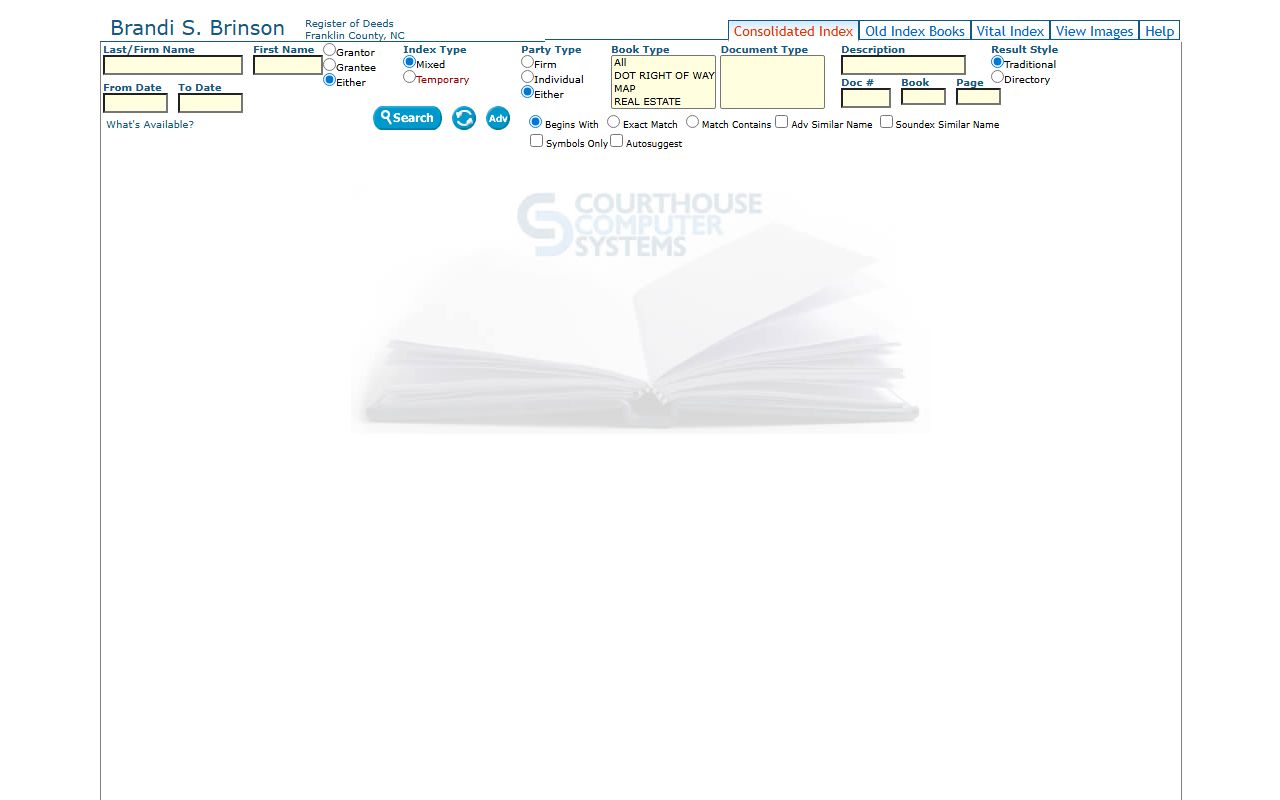
Use that index as a property-record supplement, not as the official probate court file.
Franklin County Estate Process
A Franklin County estate usually starts by deciding whether an estate must be opened where the decedent lived or owned property. The clerk's office can tell a filer what local filing path applies, but it cannot replace legal advice. The research identifies a practical sequence for wills and estate administration in Franklin County.
| Stage | Probate record created | Franklin County access point |
|---|---|---|
| Initial review | Will, death certificate needs, estate application questions | Clerk of Superior Court |
| Opening the estate | Application, letters, orders | Clerk or assistant clerk |
| Administration | Inventories, creditor notices, receipts, accountings | Probate file at courthouse |
| Challenge | Caveat and Superior Court filings | Superior Court judge path |
| Real property transfer | Recorded deeds or related instruments | Register of Deeds |
Probate flow: will or estate application › clerk review › letters if appropriate › inventory and notices › accountings › closing documents or contested Superior Court proceedings.
Note: The research did not locate a Franklin County probate fee table, so probate filing amounts should be confirmed with the clerk before payment.
Franklin County Guardianship Records
Guardianship and incompetency matters are related to probate practice, but they have added privacy limits. The North Carolina guardianship help topic says competence and guardianship proceedings are handled by the clerk or assistant clerk, who conducts the hearing and makes decisions. The respondent or guardian ad litem may request a jury to decide competence, but if incompetence is found, only the clerk decides who serves as guardian.
The hearing may be held in a courtroom, conference room, or office. The applicant may testify under oath and present evidence, and other interested parties may testify. Decisions can be appealed to Superior Court. Because guardianship files may include medical, financial, personal, and protected information, the public index or hearing listing does not mean all file content is open for ordinary inspection.
The North Carolina divorce packet image assigned in the manifest is a nearby family-court resource, but probate users should distinguish divorce forms from estates and guardianship filings.
For guardianship, use the clerk contact path rather than assuming a general family form covers the probate or special proceeding.
Restricted Franklin County Probate Records
Probate files are generally clerk records, but some materials may be closed, sealed, redacted, or available only to authorized people. Guardianship and incompetency files may include health and financial information. Mental health-related proceedings are restricted by N.C.G.S. 122C-54. Juvenile or adoption materials are not ordinary public records. A sealed order or statutory limit controls access even if the case category appears in an online search.
Land records can add a separate public trail. The Register of Deeds online disclaimer explains the county's online record system, while the probate file itself remains with the Clerk of Superior Court. Estate researchers often need both records: the court file for appointments and accountings, and the land index for deed activity.
The Register of Deeds disclaimer source is assigned as a Franklin County probate records image for this access split.
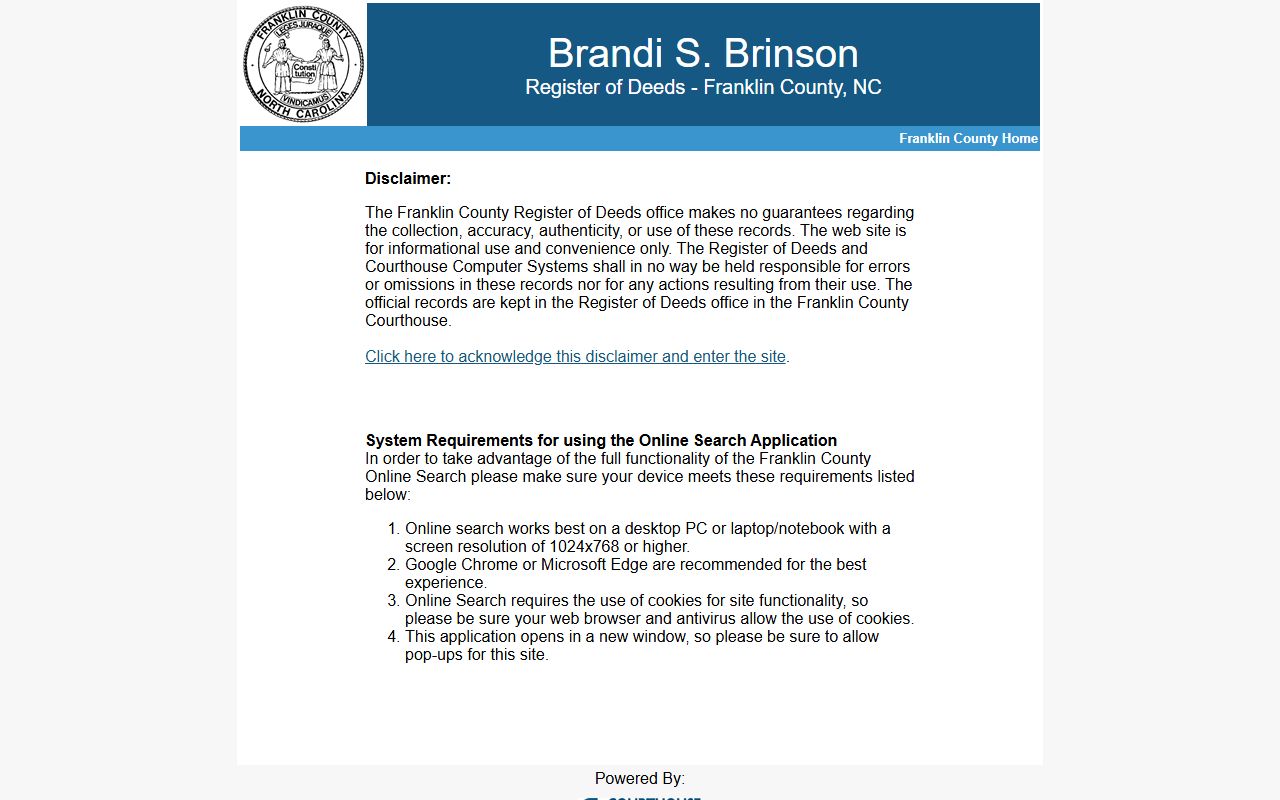
When a probate search involves real property, verify whether the record needed is a court estate paper, a recorded deed, or both.
The marriage license return statute image assigned to this page is relevant where estate research needs family-status proof from recorded vital events.
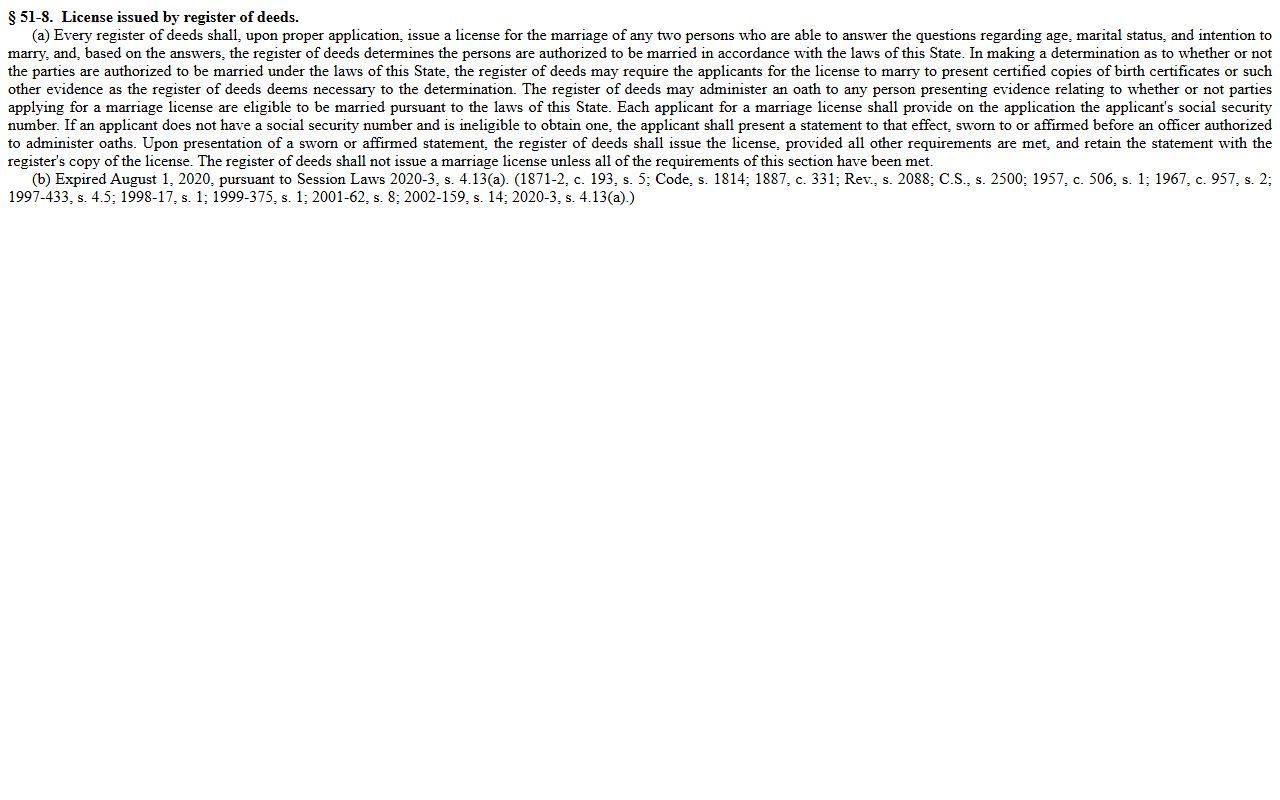
Vital-event proof can support probate questions, but the Clerk of Superior Court controls the estate file and any probate orders.