
Criminal Court Records in Franklin County
A criminal court record is the case-level file maintained by the Franklin County Clerk of Superior Court once a criminal matter is in court. It is broader than an arrest record. The court record can include the charging process, bond or release entries if filed, arraignment or first appearance events, motions, hearing settings, plea activity, trial events, judgment, disposition, sentence, probation terms, and later orders. For the narrower arrest-to-charge path, see Franklin County arrest records and charges.
Franklin County criminal court records are divided by North Carolina's trial-court structure. District Court handles misdemeanors, infractions, traffic, initial stages, and magistrate matters. Superior Court handles felony criminal cases after indictment or transfer and some appeals from District Court. The District Attorney for Prosecutorial District 11 represents the State in criminal prosecutions for Franklin and nearby counties, while the clerk maintains the public court record unless a statute or order restricts access.
The District Attorney source image is the Prosecutorial District 11 page.
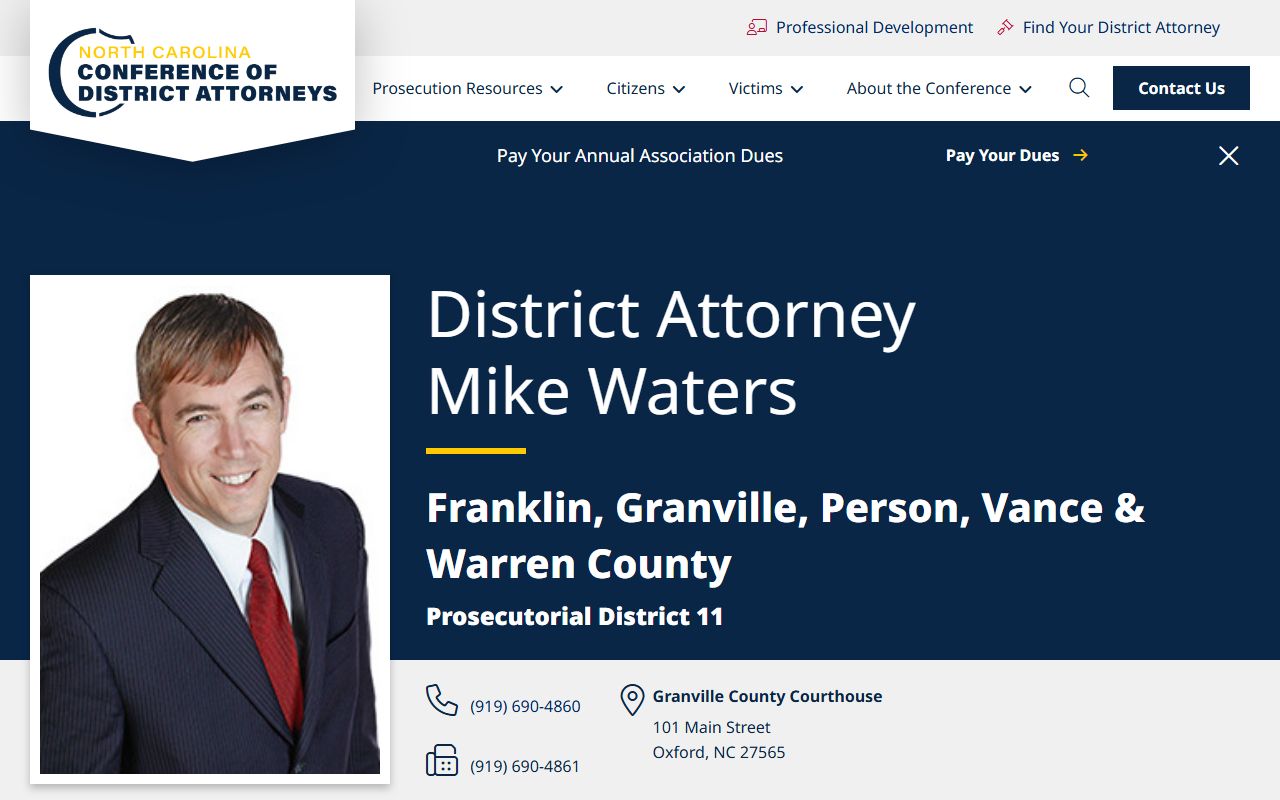
That office is central to how charges are reviewed, negotiated, tried, dismissed, or resolved in Franklin County criminal cases.
How to Search Franklin County Criminal Court Records
The main online search channel is the NC eCourts Portal Smart Search. Select Franklin County in the location filter, then search by record number, defendant name, or other party fields. Use case type, case status, file date, and party filters to narrow results. Search Hearings is better for a court date; Smart Search is better for the case record and docket activity.
- Open Smart Search and enter the criminal case number or defendant name.
- Use Last, First Middle Suffix name format, or use the portal's wildcard rules when the exact spelling is uncertain.
- Filter by Franklin County, case type, case status, and file-date range when possible.
- Review the case events for charges, hearings, motions, plea, disposition, judgment, and sentencing entries.
- Contact the Clerk of Superior Court for certified copies, older files, or background-check work.
North Carolina's Remote Public Access Program is a separate licensed data channel for statewide criminal and civil court data. It is not the same as a free public search. NC Department of Adult Correction offender search is also separate. It covers state prisoners, probationers, and parolees, and the research notes that it does not include county jail custody information.
The defense source image is the NC Indigent Defense Services Franklin County page.
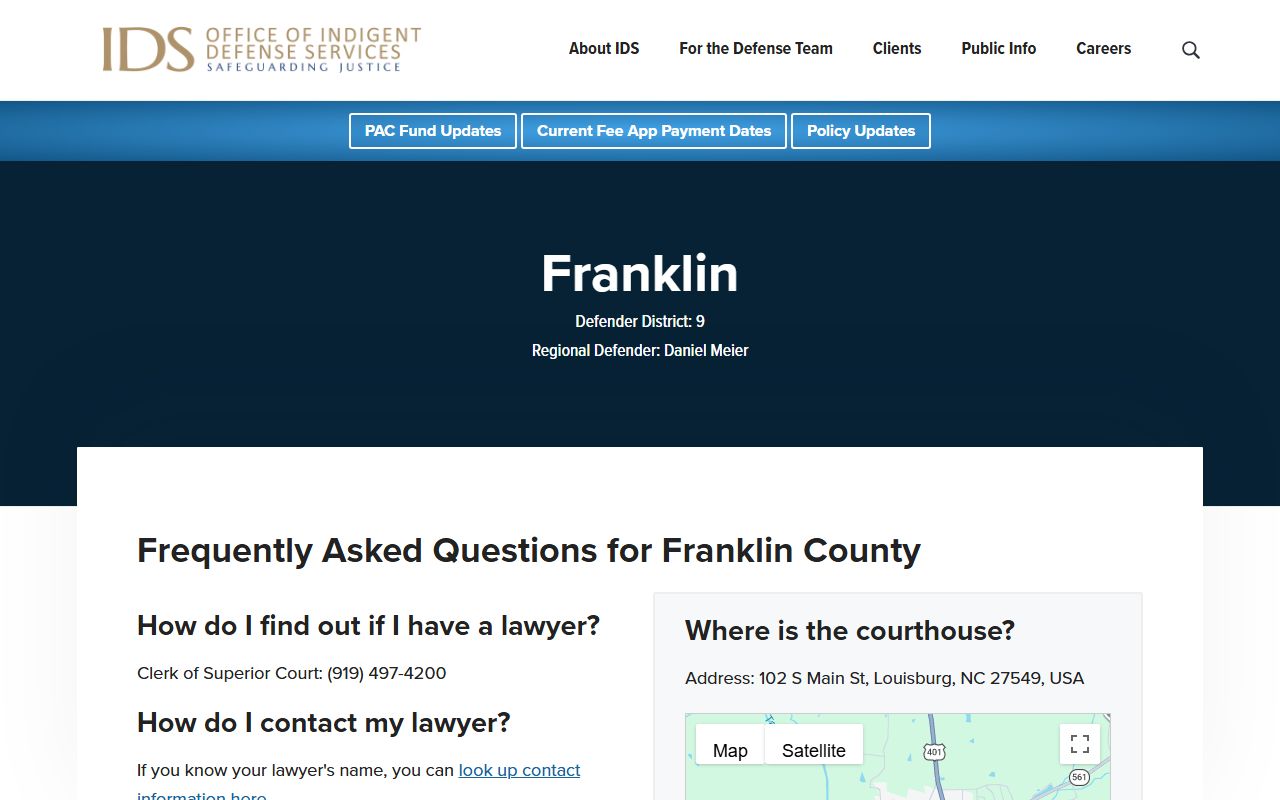
Defense assignment can affect criminal docket activity because counsel may file motions, request hearings, or negotiate case outcomes.
Stages of a Criminal Case
Criminal court records build in stages. An arrest, citation, warrant, summons, or indictment may start the path, but the court record grows as the case is filed, heard, continued, amended, dismissed, tried, or sentenced. A docket entry may be brief, so the certified file is the better source when the wording of an order, plea, or judgment matters.
Case flow: Charges Filed › Arraignment › Pretrial / Motions › Plea or Trial › Disposition › Sentencing
| Stage | What Happens |
|---|---|
| Charges filed | The accusation enters the court record through a citation, warrant, criminal summons, indictment, or other charging paper. |
| Arraignment or first appearance | The defendant is brought before the court process, and release, counsel, or scheduling entries may appear. |
| Pretrial and motions | Attorneys may file motions, request continuances, address discovery, or negotiate plea terms. |
| Plea or trial | The case is resolved by plea, dismissal, trial verdict, or other disposition. |
| Sentencing | The judgment may show punishment, costs, probation, restitution, confinement, or other court-ordered terms. |
What a Franklin County Criminal Court Record Shows
Criminal case fields in Franklin County come from the same eCourts and clerk record structure as other case types, but the criminal file includes charge-specific fields. Portal may show public case information; the full clerk file may contain additional documents. Returned warrants and indictments are court records unless sealed, while investigative records remain treated differently under North Carolina law.
| Field | What It Shows |
|---|---|
| Case number | The court identifier used for searching, hearings, payments, and copy requests. |
| Defendant and parties | The accused person, State of North Carolina, counsel, and sometimes agency or officer references. |
| Charges | Offense description, statute, class, count, amendment history, dismissal, or reduction when shown. |
| Hearings and motions | Court dates, continuances, motion filings, orders, and judicial officer entries. |
| Plea or verdict | How each charge was resolved by plea, trial, dismissal, or other disposition. |
| Sentence and financial terms | Costs, fines, restitution, confinement, probation, payment status, or other terms when public. |
Charges vs. Convictions
A charge is an accusation filed through the criminal process. A conviction is a guilty finding or guilty plea. Franklin County criminal court records can show charges that were pending, amended, reduced, dismissed, or resolved with no conviction. Read the disposition for each count instead of assuming that every listed charge became a conviction.
| Charge | Conviction | |
|---|---|---|
| Stage | Accusation or count in the case. | Final guilty plea, verdict, or judgment on a charge. |
| Record reading | Check current status and amendments. | Check disposition, judgment, and sentence. |
| Access | Often public unless sealed, juvenile, or otherwise restricted. | Often public unless expunged, sealed, juvenile, or otherwise restricted. |
Reading Dispositions and Sentences
Disposition terms explain the outcome. Common plain-English outcomes include guilty, not guilty, dismissed, judgment entered, and other case-specific endings. A sentence is the punishment or court order after conviction, such as probation, confinement, financial obligations, restitution, or other conditions. A criminal record may have multiple charges with different outcomes, so each count should be read separately.
The public defense source image is the NC IDS public defense overview.
Public defense participation may appear in the case record through counsel entries, motions, continuances, and plea or trial events.
Sealed vs. Expunged Records
Sealed and expunged records are not the same. A sealed Franklin County criminal court record is closed to ordinary public inspection by law or court order. An expunction is a statutory process that removes or seals eligible criminal records from ordinary public access after the court grants the proper order. Eligibility depends on charge type, disposition, waiting period, prior convictions, and exclusions.
| Sealed | Expunged | |
|---|---|---|
| Visibility | Closed to ordinary public access. | Removed from ordinary public access after a granted expunction order. |
| Route | Statute or court order. | Petition, agency review where required, and court order. |
| Eligibility | Depends on record type and confidentiality law. | Governed by North Carolina expunction statutes, including nonviolent misdemeanor and felony rules. |
The statute source image is N.C.G.S. 15A-145.5.
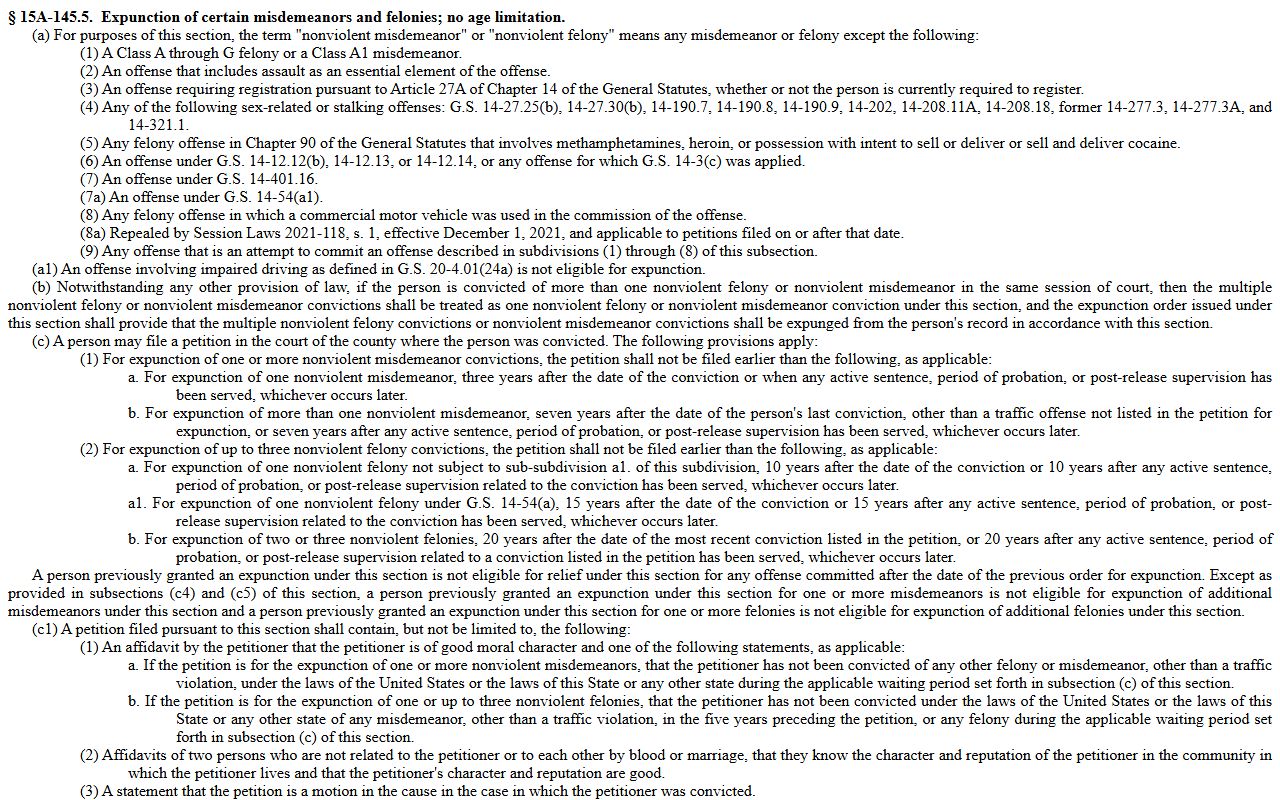
That law is one of the North Carolina statutes that can affect public access to eligible criminal court records.
Public Access to Criminal Court Records
North Carolina law generally makes clerk-maintained court records open unless another law says otherwise. N.C.G.S. 7A-109 requires clerks to keep dockets, records, files, and indexes and makes those records open during regular office hours unless prohibited. N.C.G.S. 132-1.4 separates nonpublic criminal investigative records from public arrest information and returned warrants.
Key Statutes:
N.C.G.S. 7A-109 - Clerk court records are public unless another law restricts them.
N.C.G.S. 132-1.4 - Investigative files are restricted, but basic arrest data and returned warrants have public-access rules.
Background Check Considerations
The Judicial Branch court-records help topic says people performing background checks should use the county clerk's office, not Portal alone. Portal is a case-information tool. A clerk search or certified copy request is a better fit when a person needs official criminal case information for legal, personal, or administrative reasons. Any FCRA-regulated use must follow the federal consumer-reporting rules and cannot rely on casual public lookup alone.
Important: Public case lookup is not a substitute for a lawful consumer report or a clerk-certified record.
Restricted Criminal Court Records in Franklin County
Juvenile records are confidential under N.C.G.S. 7B-3000. Adoption files, sealed records, mental health records, substance-use records, protected personal identifiers, and expunged records are not ordinary public lookup material. Public filings may also be redacted when they contain Social Security numbers, financial account information, minor information, medical details, protected addresses, or sealed exhibits.
The juvenile record source image is N.C.G.S. 7B-3000.
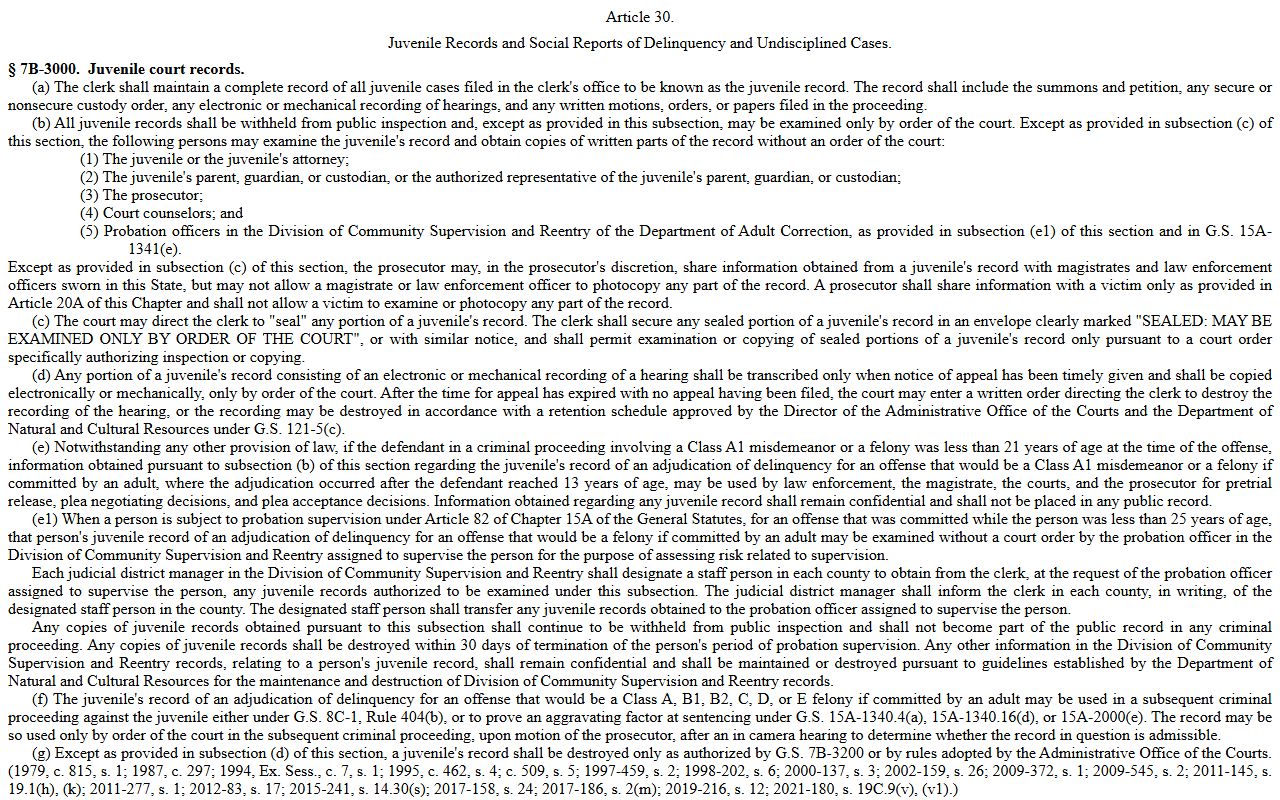
That statute explains why juvenile case information should not be treated like ordinary adult criminal court records.