
Franklin County Arrest Records and Court Charges
Franklin County arrest records start on the law-enforcement side. They may involve an arresting agency, booking, custody status, release conditions, or a warrant. The Sheriff and Detention Complex are separate from the courthouse, and the research did not locate an official Franklin County NC online jail roster. Custody or booking status must be confirmed through the detention facility or counsel unless an official roster is later published.
Court charge records begin when the accusation enters the court system. Law enforcement may start the process, but the prosecutor decides how the State proceeds in court. In Franklin County, the District Attorney for Prosecutorial District 11 reviews charges, works with law enforcement, handles plea negotiations, and tries cases. The full court case outcome belongs in Franklin County criminal court records, while this page focuses on the arrest-to-charge path.
The court-recordkeeping source image is N.C.G.S. 7A-109.
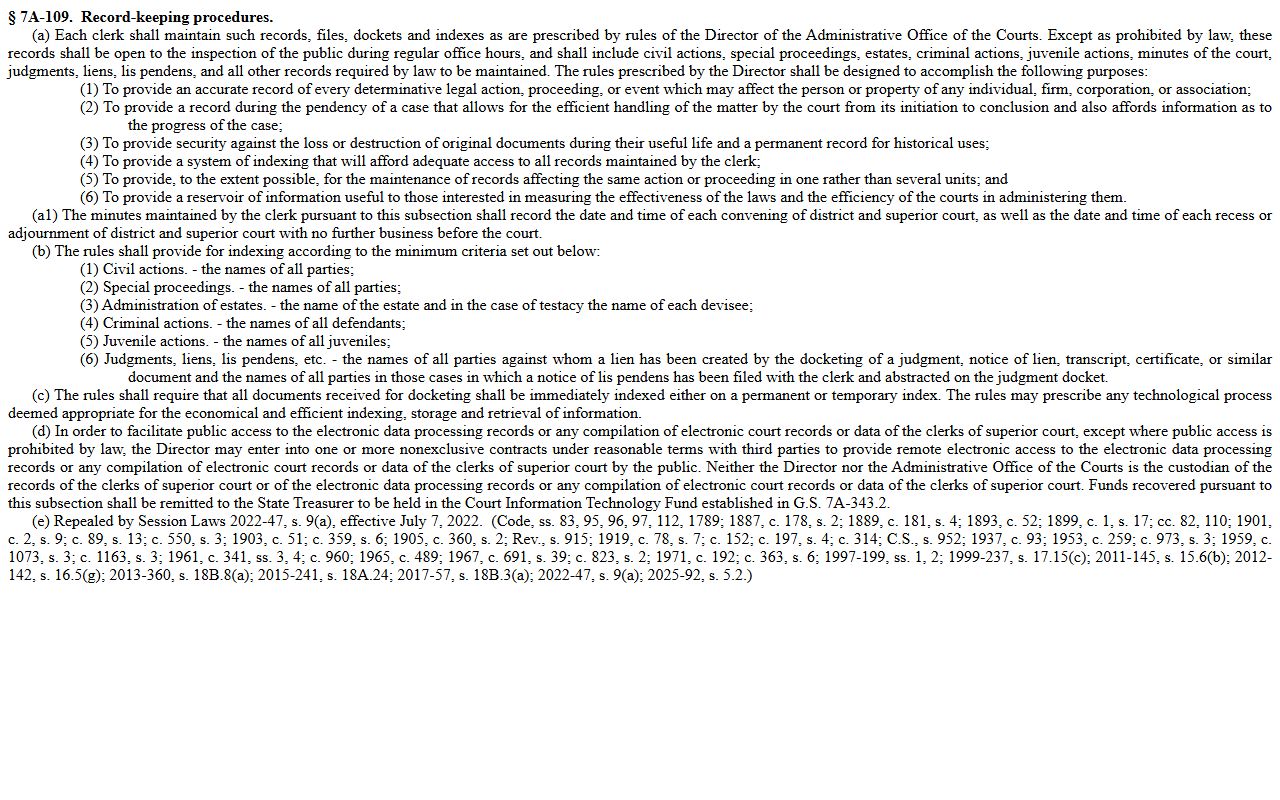
That statute anchors why court-filed charge records are maintained by the clerk rather than the jail.
How to Find Franklin County Arrest Records and Charges
Use different channels for different parts of the record. Court charges after arrest are searched through NC eCourts Smart Search by defendant name or case number with Franklin County selected. Hearing dates are checked through Search Hearings. Returned warrants and filed charging papers may be court records unless sealed. Sheriff or detention information is not the same as the court case and should be confirmed with the Sheriff or detention facility when custody status is the issue.
- Search NC eCourts Smart Search by defendant name or case number.
- Filter by Franklin County and review the criminal case entry.
- Read each charge separately, including charge text, statute, case status, and disposition.
- Use Search Hearings to confirm the next court date or courtroom when a charge is pending.
- Call the Clerk of Superior Court for certified copies or older charge records.
Statewide systems serve different jobs. NC DAC offender search covers state prisoners, probationers, and parolees, not county jail custody. The NCAOC Remote Public Access Program is a licensed data channel for statewide criminal and civil court data. No official Franklin County NC sheriff app or online active booking roster was located in the official sources inspected.
How Charges Get Filed After an Arrest: Complaint, Information, and Indictment
An arrest does not end the charging process. The court case can start through a warrant, criminal summons, citation, indictment, or other charging paper. North Carolina felony cases generally move into Superior Court through indictment or another proper transfer route, while misdemeanors and many infractions are District Court matters. The table uses the common charging-document terms required for the page while keeping the local court routing clear.
| Complaint | Information | Indictment | |
|---|---|---|---|
| Filed by | Officer, complainant, or prosecutor path depending on process. | Prosecutor when allowed by procedure. | Grand jury accusation used for felony prosecution. |
| Common use | Misdemeanors, warrants, summonses, or lower-court charging paths. | Formal prosecutor-filed accusation where permitted. | Felony cases moving in Superior Court. |
| Record effect | Creates or supports a court charge record. | Defines charges the State chooses to pursue. | Moves or confirms felony charges for Superior Court. |
The arrest information source image is N.C.G.S. 132-1.4.
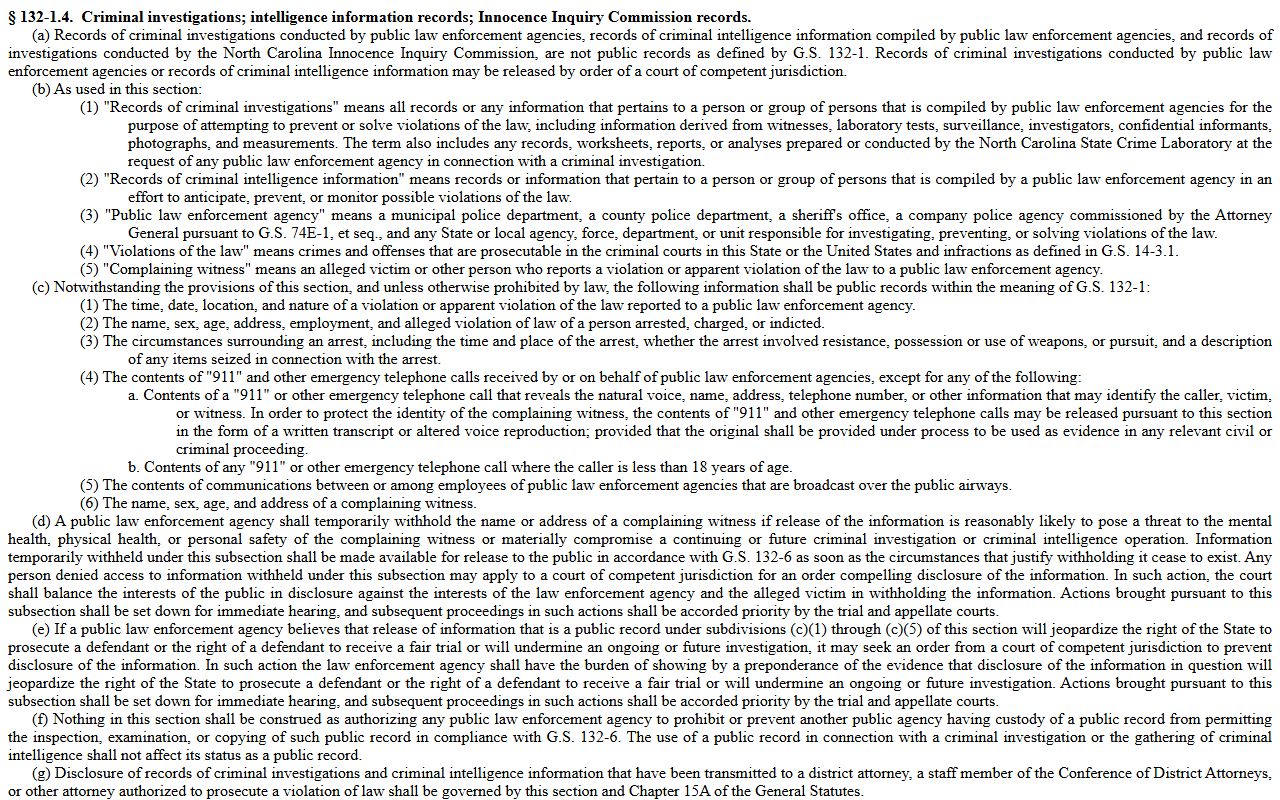
The statute separates public arrest information and returned warrants from restricted investigative records.
Charge Status and What It Means
Charge status can change as the case moves. A charge may be pending at first appearance, reduced during negotiation, amended to correct or change the allegation, dismissed by the court or prosecutor, or resolved by plea or trial. One arrest can produce several charges, and each count may have a different status.
| Status | What It Means |
|---|---|
| Pending | The charge is still active and has not reached final disposition. |
| Amended or reduced | The accusation changed, often by charge level, statute, wording, or negotiated resolution. |
| Dismissed | The charge ended without a conviction on that count. |
| Nolle prosequi | The prosecutor declines to proceed on the charge, where that status appears in the record. |
| Disposed | The count has a recorded outcome, such as guilty, not guilty, dismissed, or judgment entered. |
Charges vs. Convictions
A charge listed after arrest is not proof of guilt. The public record may show that a person was accused, but the disposition tells whether the charge led to a conviction, dismissal, acquittal, reduction, or other result. Read each charge line and final judgment before describing the outcome.
| Charge | Conviction | |
|---|---|---|
| Stage | Accusation filed in the case. | Guilty plea, verdict, or judgment. |
| Record clue | Charge text, statute, class, status, and hearing history. | Disposition, judgment, sentence, and probation terms. |
| Risk | May later be amended, reduced, or dismissed. | May still be affected by appeal, expunction, or post-judgment order. |
Sealed vs. Expunged Records
Sealed and expunged charge records have different access effects. Sealing closes a record from ordinary public inspection when a statute or order applies. Expunction is a statutory process that removes eligible charges or convictions from ordinary public access after a court grants the petition. Dismissed or not-guilty matters and certain nonviolent misdemeanors or felonies have different eligibility rules.
| Sealed | Expunged | |
|---|---|---|
| Visibility | Closed to normal public inspection. | Removed from ordinary public access after court order. |
| Route | Law or court order tied to the record type. | Petition, review, and order under North Carolina expunction law. |
| Examples | Juvenile, adoption, mental health, or sealed exhibits. | Eligible dismissed charges or eligible nonviolent offenses where statute permits. |
Charge Codes and Severity Levels
Charge records may identify the offense description, statute, charge class, agency, warrant or citation number, and status. Felony charges are Superior Court matters after proper indictment or transfer. Misdemeanors and infractions are generally District Court matters. Traffic charges can appear in court records but are separate from the DMV driver record. One arrest can create multiple charges, and a later plea can resolve them in different ways.
The public records source image is N.C.G.S. 132-1.
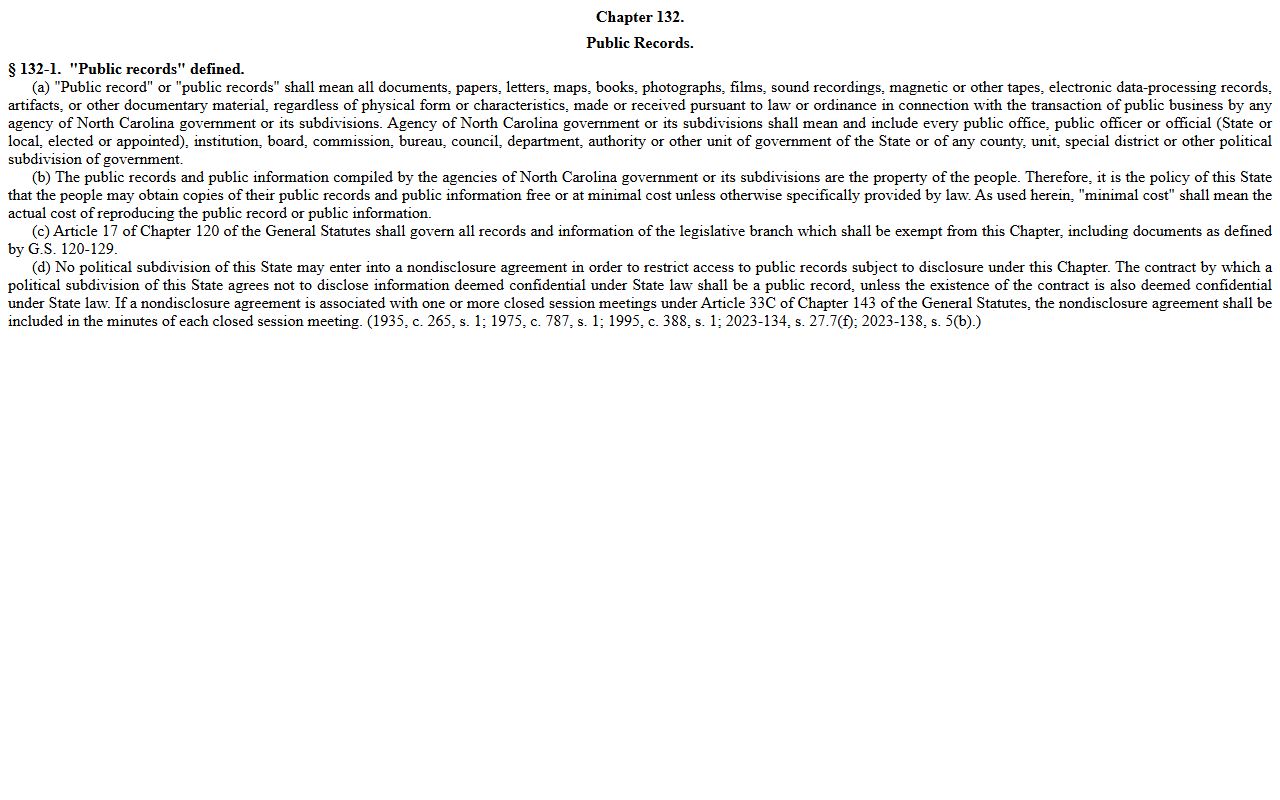
Public-record status does not make every investigative detail public, but it supports access to records that the law treats as open.
Statewide Charge and Criminal History Lookups
For court charge records, NC eCourts remains the first public case path. For state custody, probation, or parole, NC Department of Adult Correction has a separate offender search. For licensed criminal and civil court data, the NCAOC Remote Public Access Program is the statewide data channel. County jail status is not covered by the DAC search, and no official Franklin County NC jail roster was found in the inspected sources.
The inspection and copy source image is N.C.G.S. 132-6.
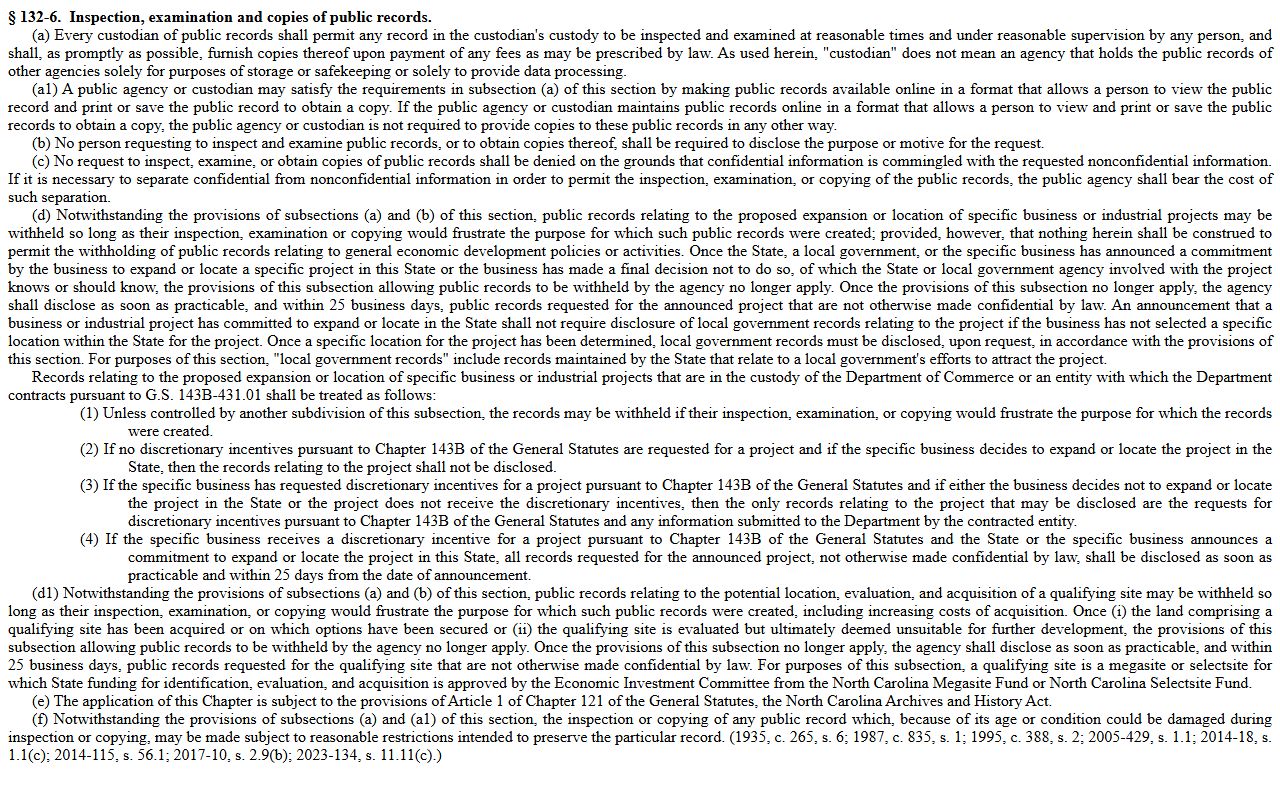
That statute supports reasonable inspection and copy access where the requested record is public and no restriction applies.
Background Check Considerations
North Carolina Judicial Branch guidance says background checks should be handled through the county clerk's office rather than Portal alone. A casual search may miss older records, restricted records, identity issues, or case outcomes. For employment, housing, credit, insurance, or other consumer-reporting uses, the federal consumer-reporting rules apply and should not be replaced with informal public lookup.
Important: A charge record is not a consumer report, and a charge is not the same as a conviction.
Restricted Charge Records in Franklin County
Juvenile records, sealed cases, adoption records, mental health proceedings, substance-use records, and expunged matters are not ordinary public lookup material. Public filings may be redacted for Social Security numbers, financial account data, minor information, protected addresses, medical details, or sealed exhibits. Investigative records remain restricted even when basic arrest information or returned warrants have a public-access rule.
The mental health confidentiality source image is N.C.G.S. 122C-54.
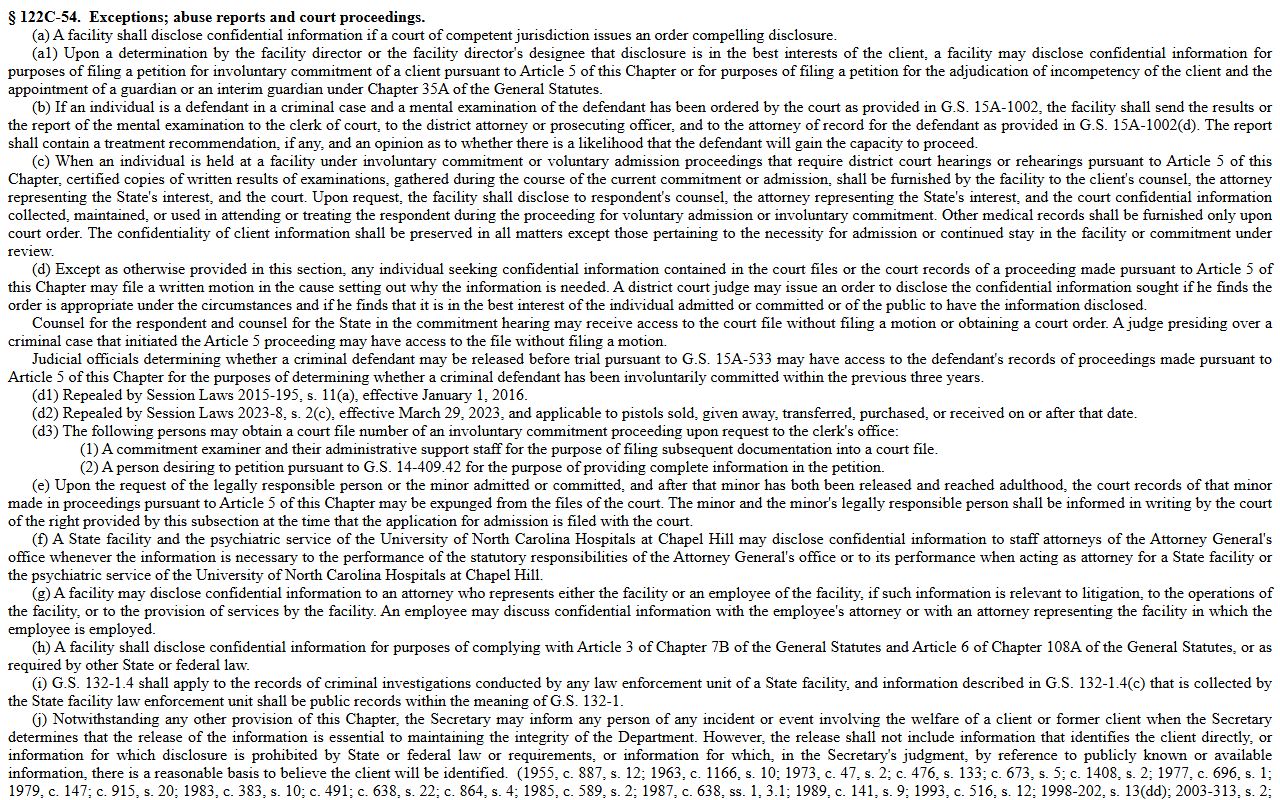
That limit is important when a charge record overlaps with treatment, competency, or confidential health information.